
Our doctor is here to help you with guidance and general inquiries.
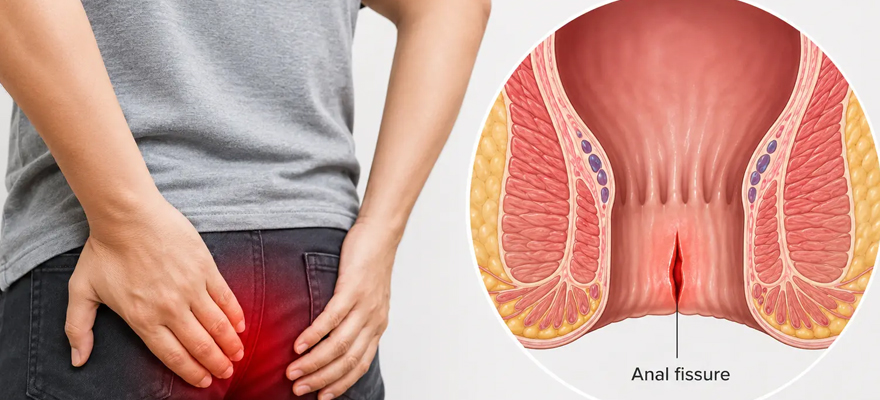
An anal fissure is a small tear or crack in the lining of the anal canal. It is a common and painful condition that can affect people of all ages. While most acute fissures heal with conservative treatment, chronic fissures may require medical or surgical intervention.
The anal canal is lined with delicate mucosa. When this lining is torn — typically due to the passage of a hard or large stool — a fissure forms. The resulting pain and spasm of the internal anal sphincter muscle can impair blood supply to the area, preventing healing and leading to a chronic fissure.
Anal fissures are most commonly located in the posterior midline and, less often, in the anterior midline. Fissures in atypical locations may suggest an underlying condition such as Crohn's disease, tuberculosis, or a sexually transmitted infection.
Diagnosis is usually made on clinical history and careful visual inspection of the anal region. Digital examination or proctoscopy may be performed when tolerated, after topical anaesthetic application if required. Further investigation may be needed if an atypical or inflammatory cause is suspected.
Dietary fibre and adequate fluid intake to soften stools, sitz baths, and topical anaesthetic creams may help acute fissures heal and provide symptom relief.
Topical glyceryl trinitrate (GTN) or diltiazem ointment relaxes the internal sphincter, improving blood supply and promoting healing. These are first-line treatments for chronic fissures.
Injection of botulinum toxin into the internal sphincter temporarily reduces sphincter spasm and aids fissure healing. Used when topical treatments have failed.
A small surgical procedure in which part of the internal anal sphincter is divided to relieve spasm and promote healing. It is the most effective surgical treatment for chronic anal fissure and is typically performed under general or local anaesthesia as a day case.
We adopt a stepwise approach to anal fissure management, beginning with the least invasive effective treatment and progressing to surgical intervention when required. Each patient receives a clear explanation of their condition and the available options, with treatment selected based on the severity of symptoms and individual circumstances.
Most patients experience significant pain relief following lateral internal sphincterotomy. Wound care, stool softener guidance, and follow-up are provided post-operatively.