

Our doctor is here to help you with guidance and general inquiries.
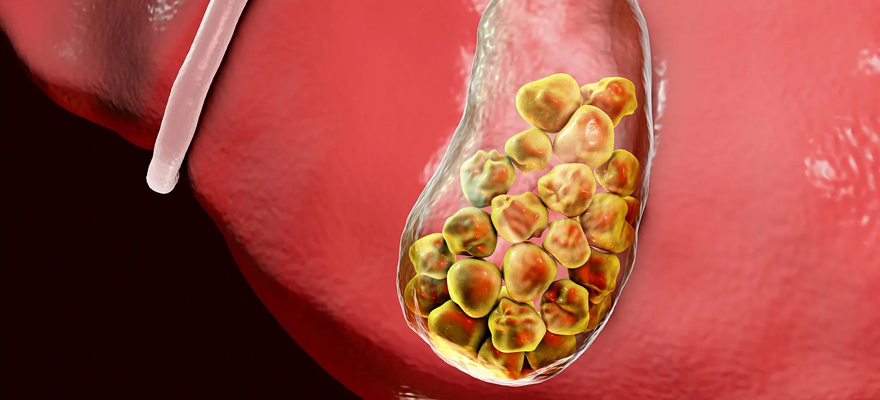
Complicated Gallstone Disease refers to situations where gallstones have caused serious complications beyond simple biliary colic, requiring prompt specialist assessment and often urgent or early surgical intervention.
Gallstones are solid deposits that form in the gallbladder. While many people with gallstones remain asymptomatic, stones can cause significant complications when they block the gallbladder outlet, migrate into the bile duct, or trigger inflammation and infection.
Complications of gallstone disease range from acute cholecystitis to life-threatening conditions such as acute pancreatitis or ascending cholangitis.
Inflammation of the gallbladder, typically caused by a stone blocking the cystic duct. Presents with fever, right upper abdominal pain, and tenderness. May require urgent or early laparoscopic cholecystectomy.
Stones that migrate from the gallbladder into the bile duct can cause jaundice, pain, and infection (cholangitis). Management typically involves ERCP to clear the bile duct, followed by cholecystectomy.
Bacterial infection of the bile duct, caused by obstruction from a stone. This is a serious condition requiring urgent treatment with antibiotics, bile duct decompression, and subsequent cholecystectomy.
Stones passing through or lodging at the lower end of the bile duct can trigger acute pancreatitis. Management depends on the severity and may involve ERCP and cholecystectomy during the same admission or shortly after recovery.
A severely infected gallbladder containing pus, requiring urgent surgical removal.
Rarely, severe cholecystitis may lead to perforation of the gallbladder wall, which is a surgical emergency.
Assessment of complicated gallstone disease includes:
Treatment depends on the specific complication:
Complicated gallstone disease requires timely specialist assessment and co-ordinated management. We provide prompt evaluation, appropriate intervention, and thorough follow-up to minimize the risk of recurrence or ongoing complications.
Seek urgent medical attention for: