

Our doctor is here to help you with guidance and general inquiries.
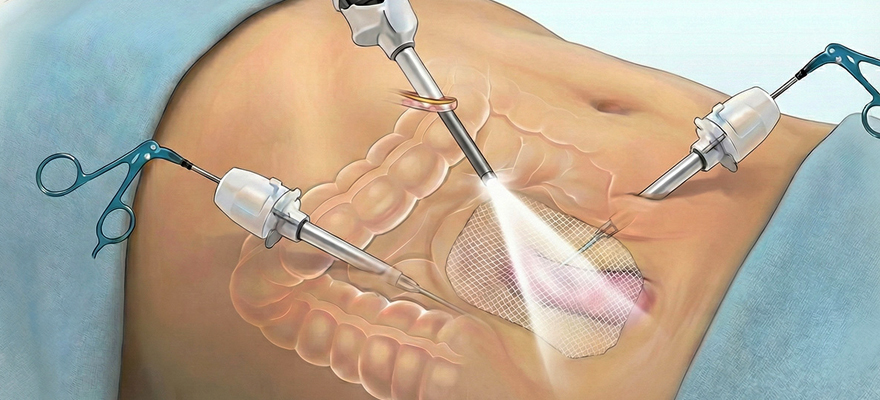
Laparoscopic and minimally invasive hernia repair techniques allow hernias to be corrected through small keyhole incisions rather than a large open wound, using a camera and specialized instruments. These approaches are well established for a range of hernia types and offer potential advantages over traditional open surgery for suitable patients.
During laparoscopic hernia repair, the surgeon introduces a thin camera (laparoscope) through a small umbilical incision and operates via two or three additional small port sites. The hernia defect is identified and a surgical mesh is placed to reinforce the weak area of the abdominal wall.
The procedure is performed under general anaesthesia. The specific technique depends on the type and location of the hernia.
Performed entirely in the space behind the abdominal wall, without entering the peritoneal cavity. The mesh is placed in the preperitoneal space to cover the inguinal defect. Widely used for inguinal hernia repair.
The hernia is approached through the abdominal cavity, the peritoneum is opened, and the mesh is placed in the preperitoneal space before the peritoneum is closed over it. Useful for bilateral inguinal hernias and when anatomical identification from within the cavity is helpful.
Mesh is placed and secured directly over the hernia defect from within the abdominal cavity. Commonly used for ventral and incisional hernia repair.
Suitability is assessed individually. Factors considered include:
Open repair remains the preferred approach for some situations, including emergency hernia surgery, certain recurrent hernias, or where laparoscopic access would be unsafe.
Most patients return to light activities within a few days following laparoscopic hernia repair. Post-operative guidance on activity restrictions, wound care, and follow-up appointments is provided based on individual circumstances and the procedure performed.
If you have been diagnosed with a hernia and would like to discuss whether a laparoscopic repair is appropriate for you, arrange a specialist consultation for a thorough assessment and a clear discussion of your surgical options.