

Our doctor is here to help you with guidance and general inquiries.
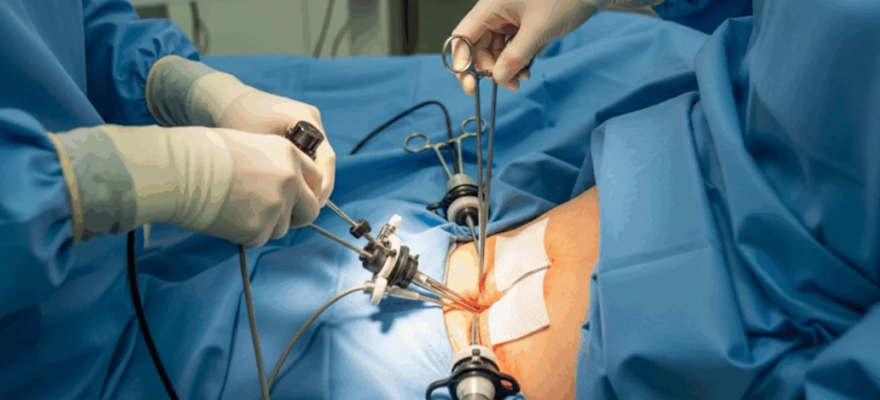
Minimally Invasive Hernia Surgery uses laparoscopic (keyhole) techniques to repair hernias through small incisions, offering an alternative to traditional open hernia repair for suitable patients. These approaches are well established for several types of hernia and are associated with potential benefits in recovery for selected individuals.
In a laparoscopic hernia repair, the surgeon operates through small port incisions using a camera and instruments, rather than a single larger open incision. A mesh is typically placed to reinforce the abdominal wall and reduce the risk of hernia recurrence.
The decision to use a minimally invasive approach depends on the type and size of the hernia, the patient's anatomy, previous surgical history, and overall health status.
Minimally invasive approaches may be suitable for:
The hernia defect is approached from within the abdominal cavity through the peritoneum, and a mesh is placed to cover and reinforce the defect before the peritoneum is closed.
The repair is performed entirely outside the peritoneal cavity, avoiding entry into the abdominal space. This technique is frequently used for inguinal hernia repair.
A mesh is placed directly over the hernia defect from within the abdominal cavity. This technique is often used for ventral and incisional hernia repair.
Pre-operative assessment includes:
Most patients are able to return to light activities within a short period following minimally invasive hernia repair. Guidance on activity restrictions, wound care, and follow-up is provided individually for each patient.
Seek a specialist consultation if you notice: