


Our doctor is here to help you with guidance and general inquiries.
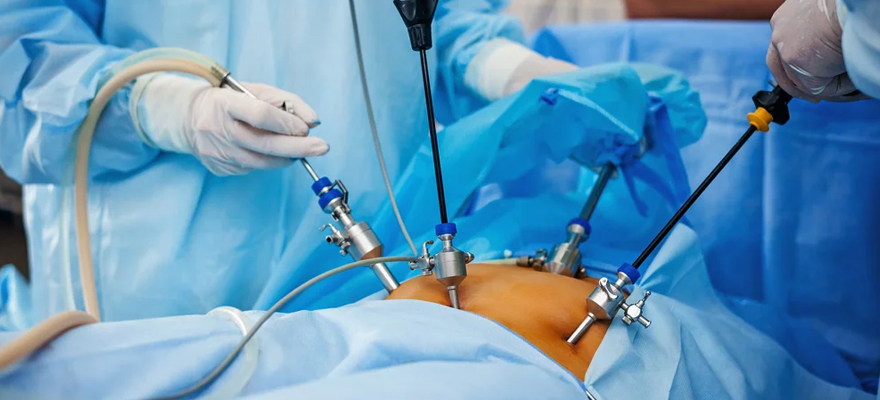
Laparoscopic Abdominal Surgery is a minimally invasive surgical approach in which procedures are performed through small incisions using a camera (laparoscope) and specialized instruments, rather than a single large open incision. This technique has become widely adopted for many abdominal operations and offers potential advantages over traditional open surgery for selected patients.
During laparoscopic surgery, a thin telescope with a camera is inserted through a small incision in the abdomen. The camera transmits a magnified view of the internal organs onto a monitor, guiding the surgeon throughout the procedure. Surgical instruments are introduced through additional small incisions to perform the operation.
The technique may be used for a broad range of abdominal conditions, either as a primary approach or in combination with other techniques when required.
Compared with open surgery, laparoscopic techniques may offer:
The suitability of a laparoscopic approach depends on the specific condition, the patient's anatomy, previous surgical history, and overall health status.
Before surgery, the patient undergoes appropriate clinical assessment, investigations, and anaesthetic evaluation. Specific pre-operative instructions are provided based on the procedure planned.
The abdomen is gently inflated with carbon dioxide gas to create space for the camera and instruments. The surgeon operates under direct laparoscopic vision, performing the necessary steps of the procedure through the small port incisions.
In some situations, conversion to an open approach may be necessary to safely complete the procedure. This decision is made with patient safety as the primary consideration.
Recovery after laparoscopic surgery varies depending on the procedure performed, but patients are often able to resume light activities sooner than after open surgery. Specific post-operative guidance, including activity restrictions and follow-up appointments, is provided for each patient.
If you have been advised that you require abdominal surgery and would like to discuss whether a laparoscopic approach may be appropriate for your condition, please arrange a specialist consultation for a thorough assessment and discussion of your options.