
Our doctor is here to help you with guidance and general inquiries.
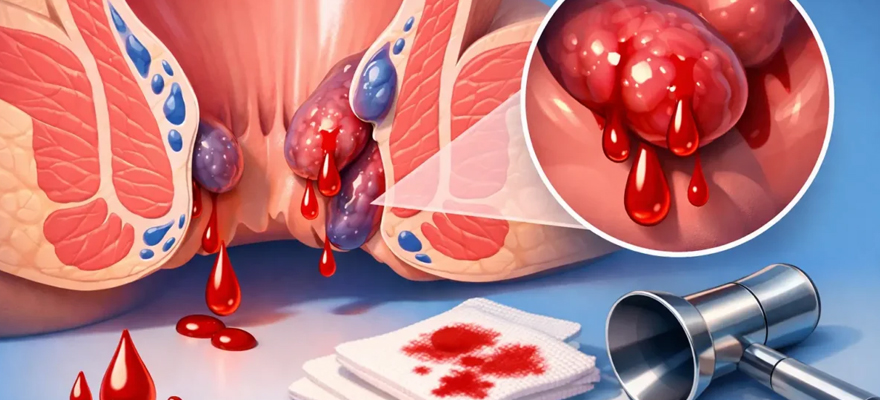
Haemorrhoids (piles) are swollen and enlarged vascular cushions in and around the anal canal. They are extremely common and, while often manageable with conservative measures, symptomatic haemorrhoids may require procedural or surgical treatment.
Haemorrhoidal tissue is a normal part of the anal anatomy, consisting of vascular cushions that contribute to anal continence. Haemorrhoids develop when these cushions become enlarged and symptomatic, most commonly due to increased straining at stool, constipation, a low-fibre diet, prolonged sitting, or increased intra-abdominal pressure.
Assessment includes clinical history, perianal inspection, and proctoscopy. Rectal bleeding should always be assessed by a specialist to exclude other causes, particularly in older patients or those with a change in bowel habit.
Dietary modification (increased fibre, adequate hydration), stool softeners, avoiding prolonged straining, and topical preparations for symptom relief are first-line for mild haemorrhoids.
A rubber band is placed around the base of an internal haemorrhoid, cutting off its blood supply. The haemorrhoid shrinks and falls off within a few days. Effective for Grade I–III internal haemorrhoids.
Injection of a sclerosant solution into the haemorrhoidal tissue to cause shrinkage. Used for Grade I–II haemorrhoids.
Surgical removal of haemorrhoidal tissue. Indicated for Grade III–IV haemorrhoids, mixed haemorrhoids, or those not responding to non-surgical treatment. Performed as a day procedure or with a short hospital stay.
A circular stapling device is used to lift and fix prolapsing haemorrhoidal tissue back into position. Associated with less post-operative pain than conventional haemorrhoidectomy in selected cases.
A Doppler-guided technique to identify and ligate the arteries supplying the haemorrhoids, reducing their blood supply and size.
Treatment is individualized based on haemorrhoid grade, symptom severity, and patient preference. We provide a clear explanation of all available options and select the most appropriate approach to achieve lasting symptom relief.
Recovery depends on the procedure. Non-surgical treatments are typically performed as outpatient procedures with minimal recovery time. Surgical haemorrhoidectomy requires a short recovery period and post-operative wound care guidance is provided.